Holm Grown
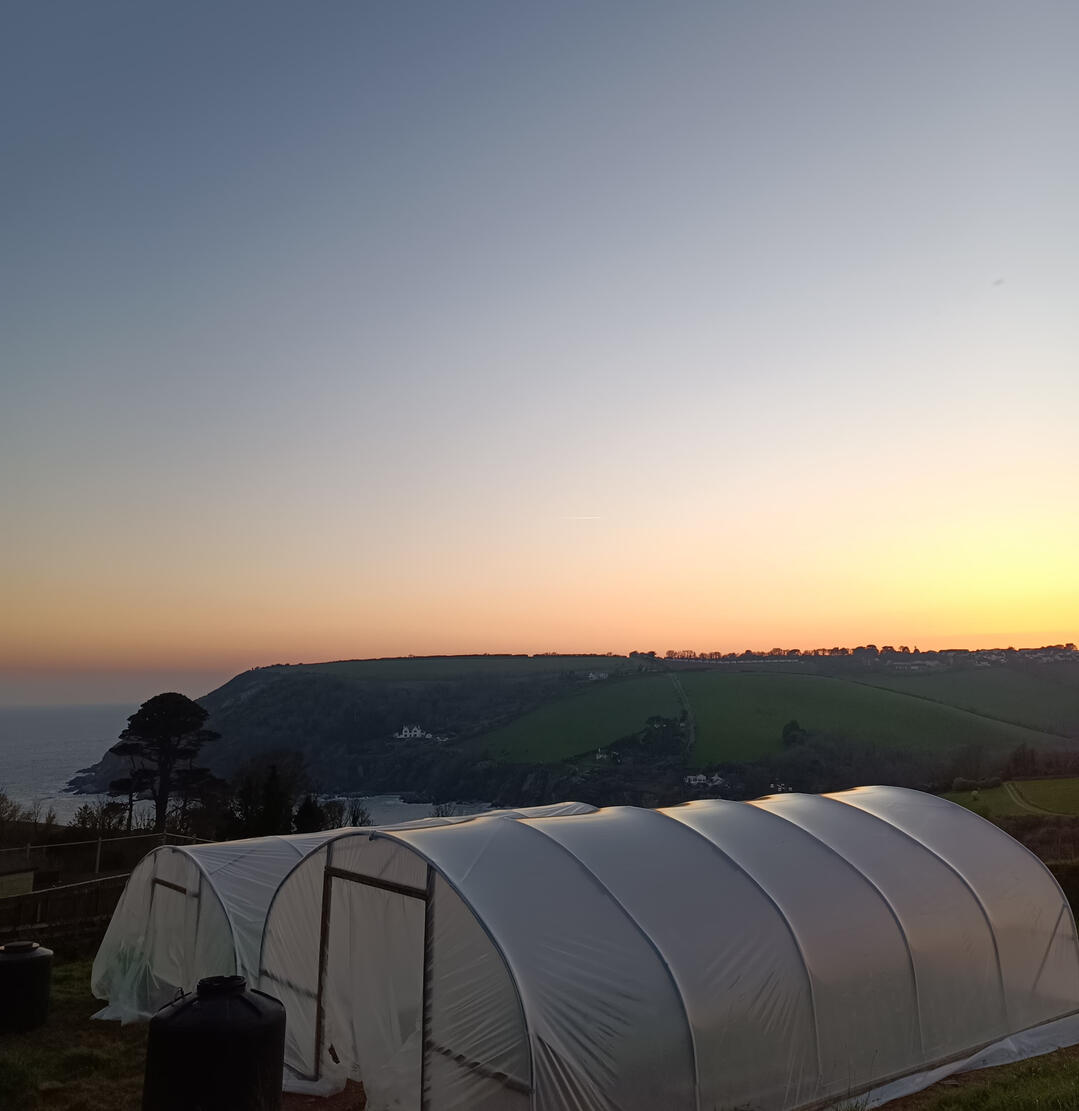
Some people arrive at their land with a sense of what it could become. Not a vision imported from elsewhere — something latent in the place itself. Land that is neither fully tamed nor fully wild, but held at a considered edge between the two.
The land is already doing something. I'm interested in understanding what that is — and in helping shape the relationship between it and the people who inhabit it.
Before deciding what a place needs, I want to know what it's already doing — what processes are underway, what the site is inclined toward.
The Work
I manage and improve larger gardens, smallholdings, and estates across North Cornwall — working practically alongside landowners who want their land to function better, look after itself more, and become something they genuinely enjoy.
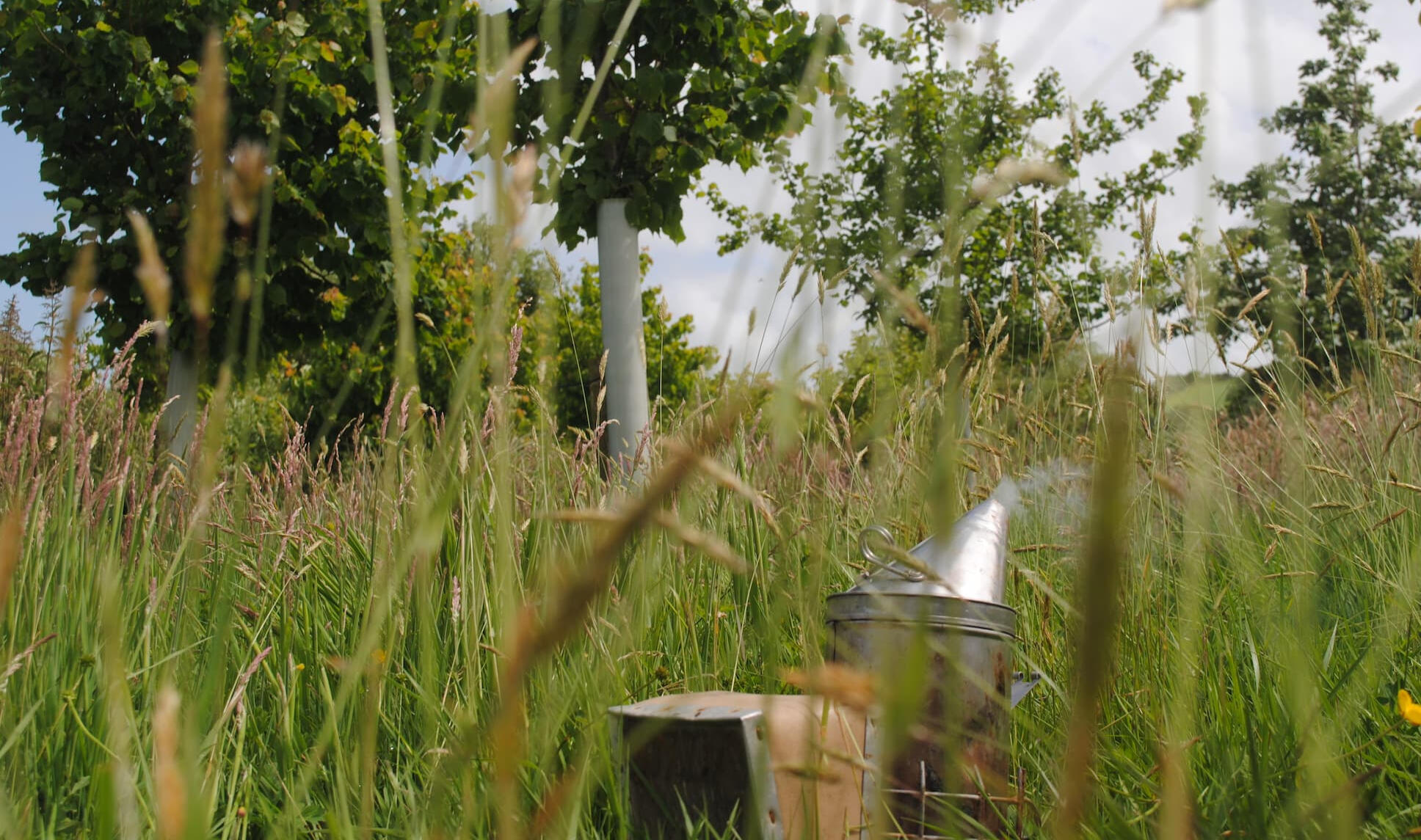
That might mean tackling shrub and tree work that's got beyond a typical gardener, establishing composting systems that actually work with the land's outputs, developing orchards and productive food landscapes, or thinking through planting design that earns its place over time. Often several of these together.
The common thread is long-term thinking applied practically — less about quick fixes, more about land that becomes easier and more rewarding to inhabit as the years go on. And well-designed land can do more than one thing at once: habitat and productive yield, water management and amenity, ecological function and financial return — not as a compromise between competing objectives, but as an integrated design decision made at the outset.
Land & Property Review — £250
A good starting point for most new clients — and often the moment when a piece of land starts to make sense.
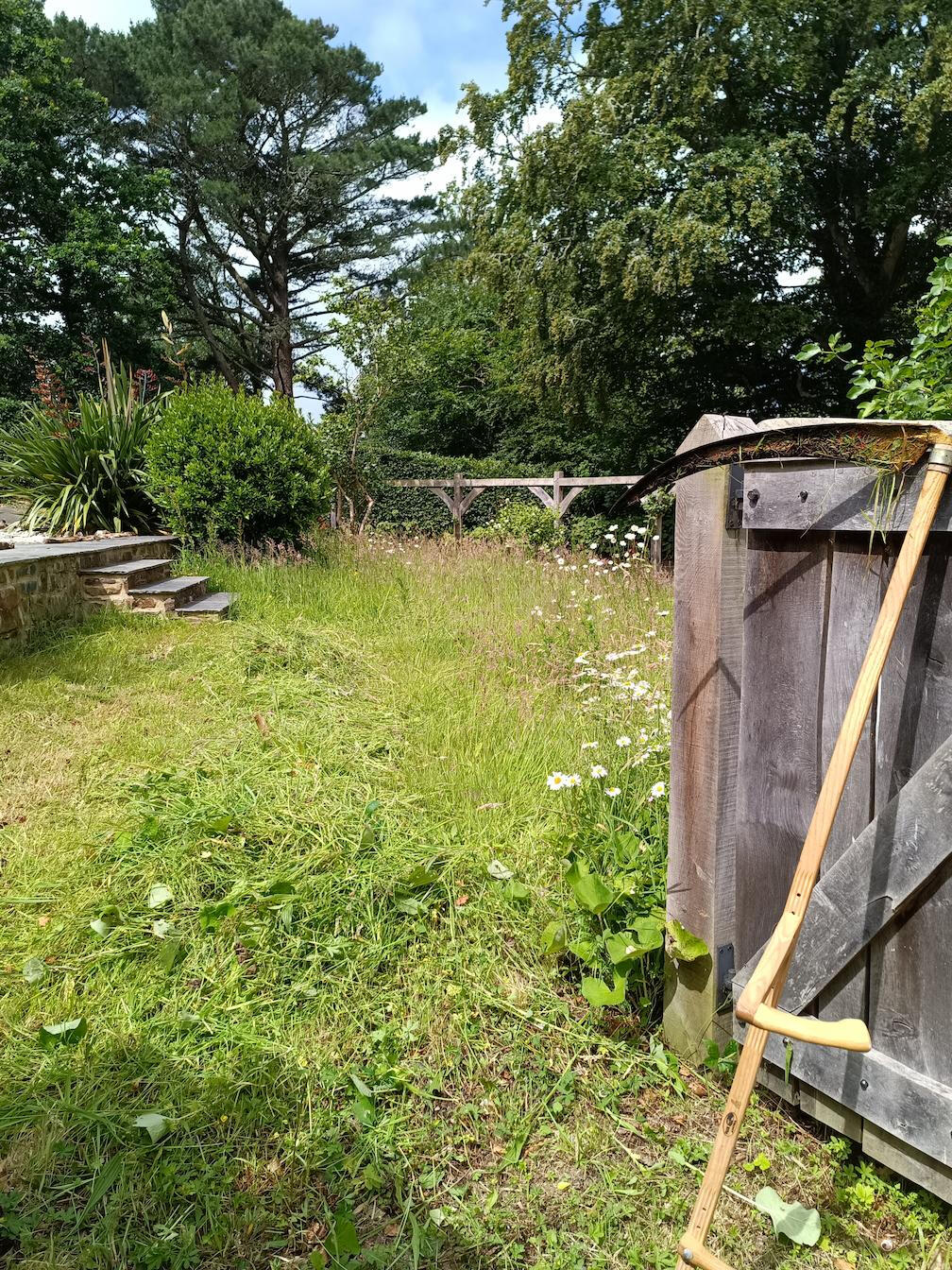
I come to you, spend time on site, and look at the land properly. What's working, what isn't, where effort is being wasted, and where there's genuine opportunity. We talk through what you want from the place — practically and longer term.
Afterwards you receive a written report: clear priorities, a realistic picture of what's possible, and a suggested direction for ongoing management.
For most clients, this is where the relationship begins.
Water
Some land already has water on it. A stream edge, a low wet corner, a field that holds the winter rains longer than it should. Other land is dry but wants a pond — for swimming, for wildlife, or for the practical reasons that a well-placed body of water improves almost any site it belongs to.
Water is one of the most powerful things you can add to a piece of land, and one of the easiest to get wrong. The difference between a pond that thrives and one that slowly silts, blankets in algae, or fails to attract the life it was made for is almost always in the design decisions made before a spade goes in.
I design and create three kinds of water feature — natural swimming ponds, wildlife and ecological ponds, and strategic water systems — and I work with water that's already present on a site as well as water that isn't there yet.Natural Swimming PondsThe most design-intensive of the three. A swimming pond is not a pool with plants around it — it's a living system in which the biological processes of a healthy wetland keep the water clear enough to swim in without chemicals. Getting that balance right requires genuine ecological design, not just aesthetic intent. When it works, the result is something that improves with age: more ecologically rich, more beautiful, and no more expensive to maintain than a garden.Wildlife & Ecological Ponds.Where biodiversity, not swimming, is the objective. Where a swimming pond keeps water open and clear for people, a wildlife pond maximises edge, shallow margins, seasonal variation, and structural complexity for everything else. These are also the ponds most likely to attract funding — through Countryside Stewardship, Farming in Protected Landscapes, and other routes — and part of what I bring is the ability to design features that qualify, and to navigate that process alongside the practical work.
That wet corner that floods every winter, the field that's too heavy to do much with — these are often better understood as opportunities than problems. A well-designed scrape or wetland can work with the land's existing hydrology rather than against it, and qualify for funding that significantly reduces the cost.Strategic Water ManagementWorks at the scale of a whole site or holding — thinking about where water comes from, where it goes, and where it could be slowed, stored, or put to work. Swales, rain gardens, attenuation features, and integrated catchment thinking. This line of work often connects with the terrestrial side of the practice, because how water moves through a landscape shapes everything else about it.
A well-placed water feature doesn't just solve a problem or add beauty — it can simultaneously qualify for funding, improve how the whole site handles rainfall, support biodiversity, and produce something useful. The ability to design for that kind of value from the start is what distinguishes ecological land management from contracting.
Across all three, the same principle applies: a water feature created properly doesn't stop needing attention once it's in the ground. Light, regular stewardship — seasonal management, monitoring, adjustment — is what keeps a living system alive and prevents the slow decline that makes restoration eventually necessary. For most clients, this is where the ongoing relationship develops.
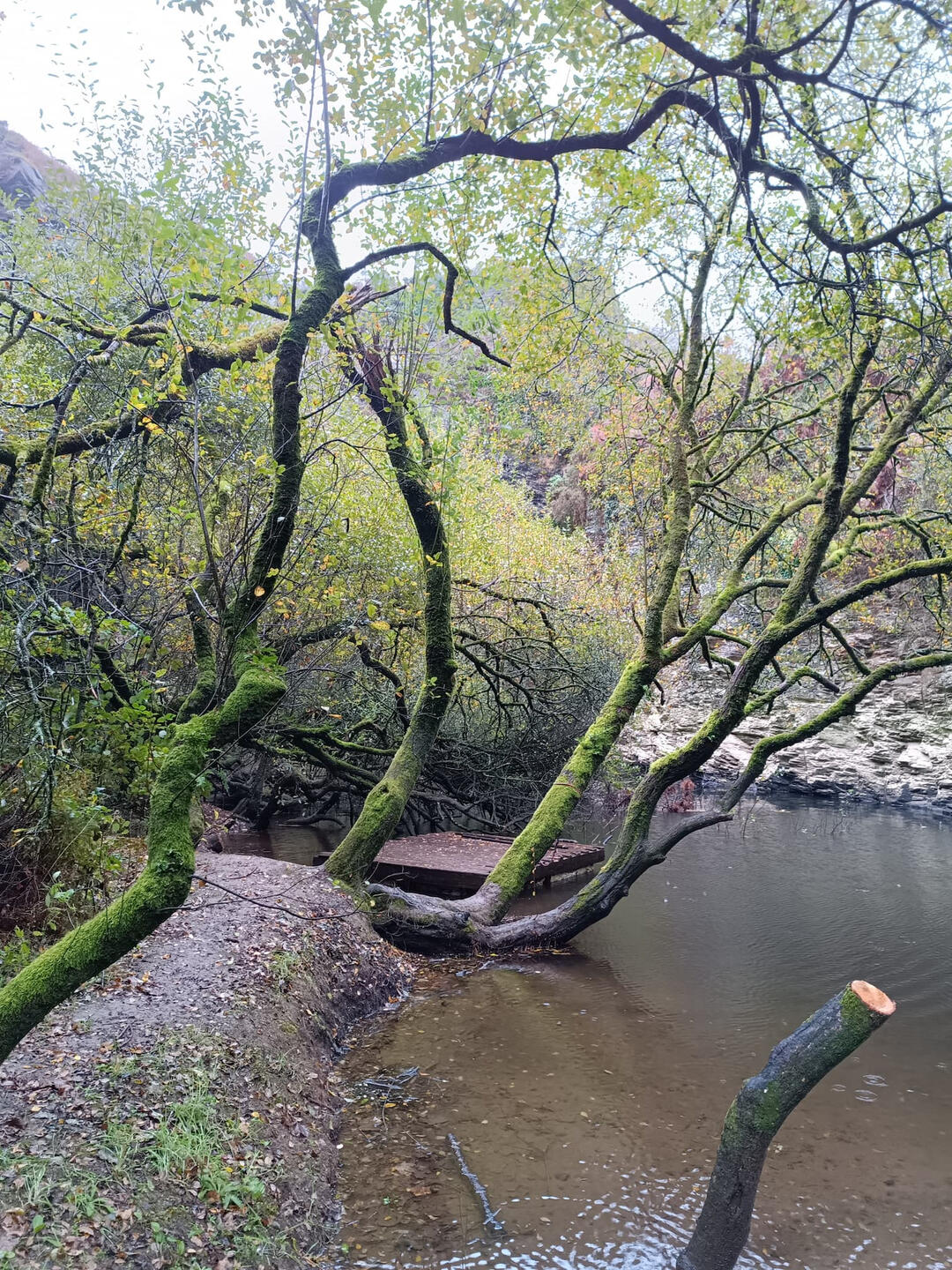
Temperate Rainforest
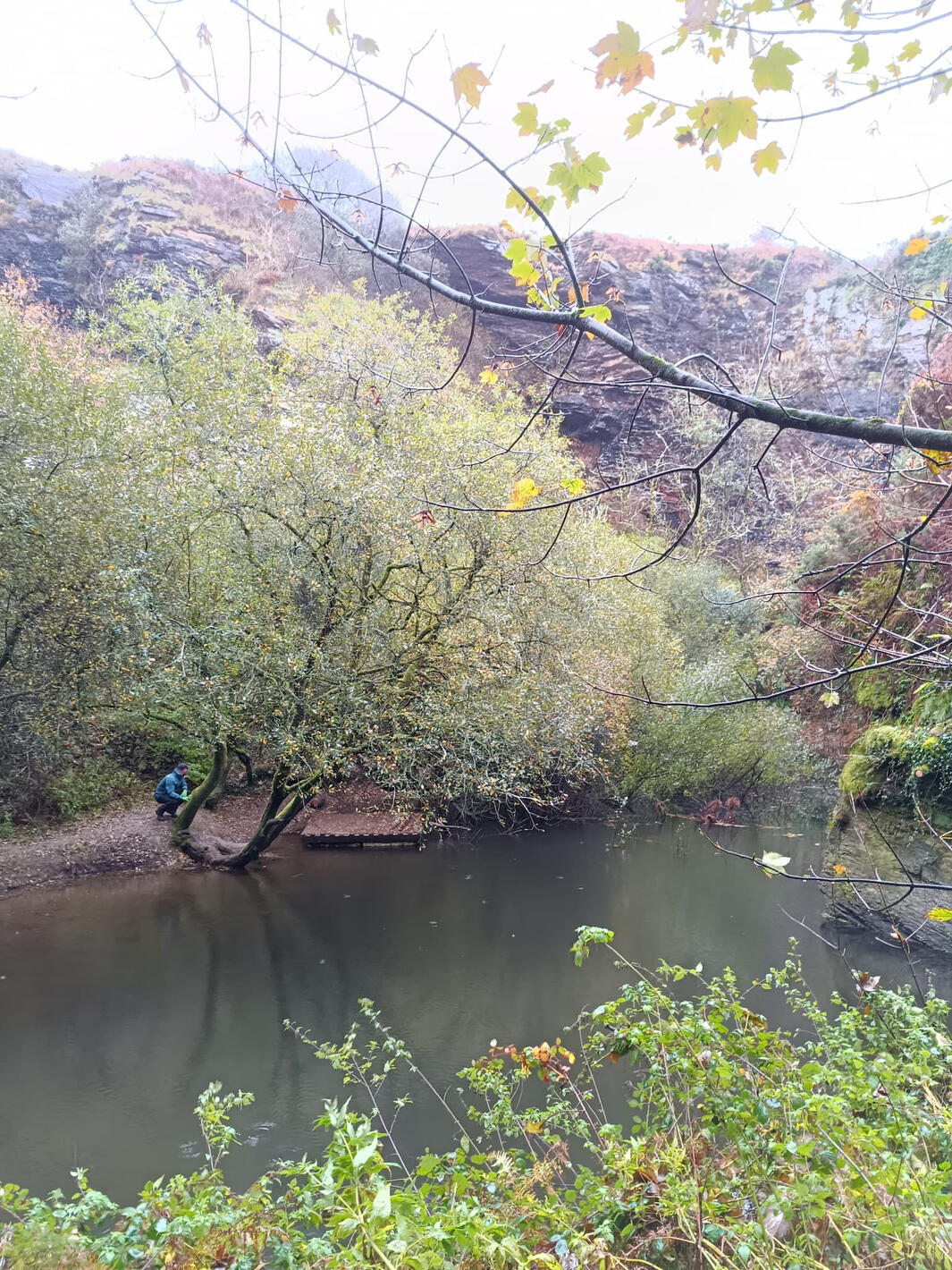
The Atlantic fringe of Britain holds the remnants of one of the rarest habitat types on earth. Temperate rainforest — oceanic, lichen-hung, structurally complex, dependent on clean air and consistent rainfall — once covered much of western Cornwall and Devon. What remains is fragmented, often degraded, and mostly unrecognised for what it is by the people whose land it grows on.
North Cornwall sits within the bioclimatic range where this habitat can exist, recover, and expand. The conditions are here. The question is whether the land is being managed in a way that allows it.
I am developing a specific practice area in temperate rainforest site assessment and establishment — reading sites for their potential, identifying existing fragments and their ecological quality, and working with landowners on the conditions that allow this habitat to develop: appropriate grazing regimes, native species planting with locally provenanced stock, the removal of pressure rather than the imposition of intervention.
This is slow work by nature. Temperate rainforest doesn't establish quickly, and the most important thing a practitioner can bring is an accurate reading of what a site is already doing — which fragments have continuity, where the indicator species are, what the hydrology and aspect are telling you — before any decisions are made about what to plant or change.
If you have land in North Cornwall that might carry this habitat, or woodland that you suspect is more ecologically significant than it looks, I'm interested in hearing about it.
About
I'm Tom Holmes. Before settling in North Cornwall I worked with land across much of England and Wales — from East Anglia to the Avon valley, the Cotswolds to the Welsh uplands. That range of landscape and context is something I draw on constantly.
I work observationally, interested in what a place is already doing before deciding what it needs. Holm Grown is a small, considered practice. I work with a limited number of clients at any one time.